ABOUT THE PROJECT

After millennia of soil biology, the natural capital of New Zealand soils is exhausted, largely due to unsustainable industrial agriculture and landuse.  This project responds to the urgent need to rethink relationships between humans and soil.  The state of the planet’s soil is dire, and soil loss exceeds replacement.  Soil has become synonymous with agriculture, manufacturing, farming, farmers and food and knowledge of ethical ways to farm, grow food and live with soil have been marginalised.

Naturecultures scholarship brings to the fore questions of belonging to soils, being part of and attuned to soils, and the radical autonomy of soils as world-making beings. 

Can we halt soil degradation through the consideration of soil sovereignty?

This research will explore and consider soil as sovereign kin in the context of regenerative agriculture and undisturbed forest soil ecosystems. Thinking of and with soil as Papatūānuku, Gaia and as a self-determining world with world-making abilities, spiritual and conscious; and the Indigenous perspective that soil has mana and agency independent of humanity.

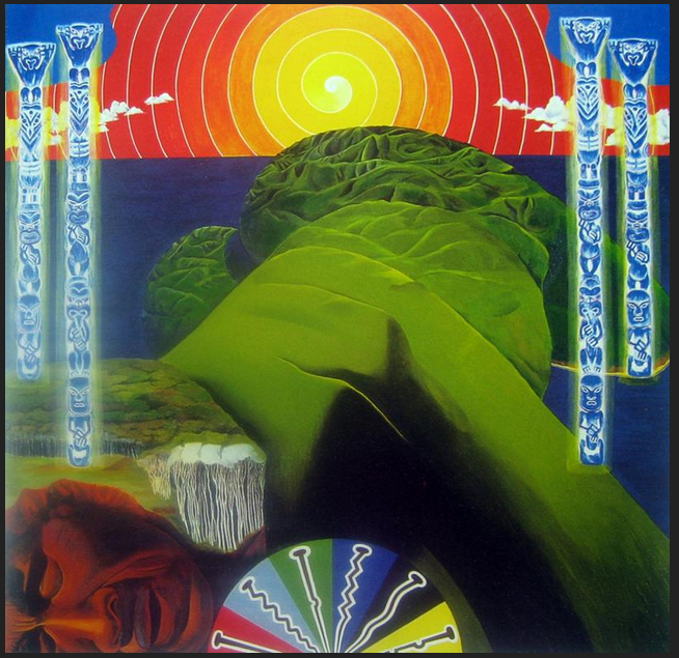
Papatūānuku Oil painting by Robyn Kahukiwa

What is soil beyond the pre-dominantly westernised rationalisation?

Māori peoples understand soil as far more than just a thin layer of matter on the earth’s surface; soil is kin to Māori and possess mauri (or life force), wairua (a spiritual energy) and mana (power, sovereignty and agency).

Soil ‘speaks’ to Māori through genealogical links to Hine-ahu-one, the first human form created from the earth mother Papatuanuku.

Soil is a living taonga within an interwoven universe – not a commodity, but to be respected. These beliefs are reflected in soil-human practices – for food growing, health, cultural practices, and self-identification.

Research Question:

Research Objectives:

  1. Living with soil and engaging with the morethanhuman
  2. Develop a New Zealand-specific soil sovereignty framework/portfolio

Research Contexts:

  1. Regenerative agriculture (two farm sites)
  2. Forest ecosystems (two forest sites)

THE RESEARCH TEAM

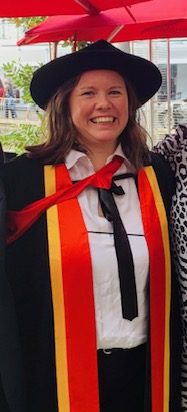
Dr Leane Makey – Research Lead

Principle Investigator, School of Environment, University of Auckland

Dr Makey was the recipient of a NZ Royal Society Marsden Fast Start Award 2024 and will lead and manage the project, carry out data collection and analysis, and disseminate findings.

Leane holds a research fellow (post-doc) position in the School of Environment, specialising in critical social environmental research. She has a BSc (Hons) in marine ecology and a PhD in environmental sciences.

She bridges scientific inquiry and activist practice to contribute to equitable and sustainable futures for ecosystems and communities. Leane has worked in Indigenous and ecosystem environmental management and restoration for over 20 years in New Zealand and Australia. She is also a part-time sheep farmer.

Areas of Expertise:
Critical social environmental research; intersectionality; nature-culture (or socionatures) relations; biodiversity; ecosystem-based management; Indigenous philosophies and methodologies; geo-creative practices.

If you would like to participate in this novel research and/or find out more about the project, please email Leane Makey

Anna Krzywoszynska

Associate Investigator, University of Oulu, Finland

Anna is an Associate Professor in Transdisciplinary Human-nature Relations at the University of Oulu, in the Faculty of Humanities and the Department of Anthropology. Anna was appointed via the Academy of Finland Profi6 Biodiverse Anthropocenes programme, following a competitive international assessment. Anna leads a research team on the transformation to more sustainable and just agri-food and land relations. The current focus includes microbial and soil-related knowledge systems. Anna has over 12 years contributing to the scholarship of science and technology studies, environmental humanities and human geography including debates in the interdisciplinary fields of Anthropocene studies and morethanhuman scholarship.

Alice McSherry

Associate Investigator, Aroha Qi Ltd, NZ

Alice McSherry (she/her, Naxi/Han Chinese, Pākehā) is a māmā of two, an independent researcher and community practitioner working at the intersection of cultural and ecological revitalisation. Alice completed her PhD in human geography in 2024, which engaged decolonial storywork via a critical autoethnography of plant medicine and ritual, inter-species communication and ancestral recovery. She continues to potter in her home apothecary as a community herbalist, regenerative horticulturalist and general plant whisperer in her spare time. 

When she is not working on soil-related things, Alice also serves as a co-Kaiwhakatere/Navigator for the Waiheke Marine Project, a community and mana whenua led movement working toward the protection and regeneration of Waiheke’s marine environment. She also works as a teaching fellow in the School of Environment, University of Auckland, lecturing at undergraduate and postgraduate levels. 

While Alice often describes herself as a bit of a ‘professional magpie’, central to all of her mahi are inquiries of/with processes of ancestrally-informed cultural and ecological recovery and the expansion of more-than-human kinship for regenerative future(s) for people and planet. 

BLOG POSTS

Underground [Soil] Festival: New Zealand’s regenerative agriculture event of the year.

Are you going to the Underground [Soil] Festival? We are heading along to gauge the status of regenerative agriculture in New Zealand. The research wishes to understand diverse perspectives of soils held by those undertaking regenerative agriculture. And what is regenerative agriculture? The research finds that its purpose and/or focus is context specific. Its meaning is defined by the local context in which…

Wanted: soil research participants

We urgently need to rethink our relationship with soils, and go beyond considering soil as a mere layer of physical matter on the earth’s surface. Our research team is gathering a diverse range of soil perspectives for two contexts: (a) food growing context of regenerative agriculture, biodynamics, permaculture, hua parakore, organics and the like; and, (b) the non-food context of forest or ngahere ecosystems.…

Introducing the Technical Advisory Komiti (TAK)

Objective two will respond to objective one with a soil sovereignty portfolio (previously called framework). Through literature review, theoretical and empirical materials, we will determine the necessary principles, understanding and practices that will provide a sustainable and just approach to soil restoration and management in the Anthropocene. Through analysis of the two contexts, regenerative agriculture (a food growing context) and forest ecosystems (a…

Human Participants Ethics Granted

This research has been APPROVED BY THE UNIVERSITY OF AUCKLAND HUMAN PARTICIPANTS ETHICS COMMITTEE FOR 3 YEARS UNTIL 6 June 2028. REFERENCE NUMBER UAHPEC29110

#DRLEANEMAKEY

PhD (doctorate of philosophy in environmental sciences) conferred on Wednesday 3 June 2021, Tamaki-makarau, Aotearoa New Zealand. Its done! Visit university of auckland researchspace to read and view if you wish. The three papers inside the thesis are now published too. Details include: (1) Makey, L. and Awatere, S. (2018) He Mahere Pāhekoheko Mō Kaipara Moana–Integrated Ecosystem-Based Management for Kaipara Harbour, Aotearoa New…

If you would like to be notified of new Blog Posts please provide your email and hit the subscribe button